
Voyager 2 Continues it's Journey
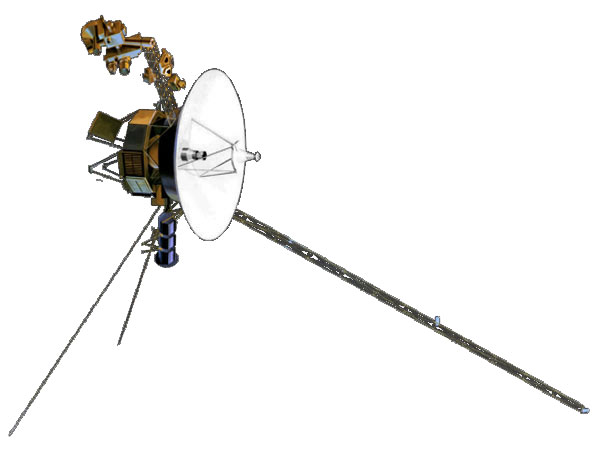 |
The probe utilized a rare planetary alignment to visit Jupiter in 1979, Saturn in 1981, Uranus in 1986, and Neptune in 1989.
It discovered 16 new moons across the giant planets, the ring systems of Uranus and Neptune, and a phenomenon known as Neptune's Great Dark Spot.
It carries a phonograph record containing sounds and images selected to portray the diversity of life and culture on Earth.
It is presently located over 11 billion miles from Earth, traveling through the space between stars.
It operates on a declining nuclear power source made of plutonium.
NASA engineers continue tweaking power systems to keep its remaining science instruments functional.
Voyager 2 is still active and communicating with NASA from interstellar space, over 13 billion miles away from Earth. It presently operates outside the heliosphere in interstellar space.
Three working science instruments are still returning data.
The plutonium power source loses about 4 watts each year, forcing engineers to turn off nonessential systems and implement power saving adjustments like the "Big Bang" fix. It involves turning off non-essential systems and switching to lower power mechanisms in an effort at energy preservation as the probe's nuclear power source continues to diminish.
Voyager 2 is expected to completely lose the power required to transmit signals back to Earth sometime in the early 2030s.
Even though lack of communications will eventually cause massive electronic failure, Voyager 2 will not technically "die" in a physical sense.
Without friction or atmosphere in interstellar space, the spacecraft will continue coasting indefinitely along its trajectory out of the solar system, carrying its Golden Record for billions of years.
I think that the exploits of Voyager 1 and Voyager 2 are pretty marvelous given their age discoveries, and histories.