
The Michelangelo Virus of 1991
I vaguely recall The Michelangelo virus. Back then I was a voracious reader of the technology journals of the day with Jim Seymour and John Dvorak authoring much of that predominating literature which passed by my desk.This tedious exploit was discovered on it's first computer on February 4, 1991 in Australia. It was designed to infect DOS systems and did not engage or make any calls to the operating system proper. Michelangelo was a boot sector virus and operated at the BIOS level. Annualy, the virus remained dormant until March 6 which is the birthday of Renaissance artist Michelangelo.
There are no references to the artist in the payload of the virus, and it is doubtful that the developer intended Michelangelo to actually be referenced to it. The name was chosen by researchers who noticed the coincidence of the activation date. The actual significance of the date to the author is unknown.
Michelangelo is a variant of the Stoned virus of 1987 which had a payload which reported Your PC is now Stoned ... Both viruses were first detected in the pacific rim region of Australia and New Zealand.
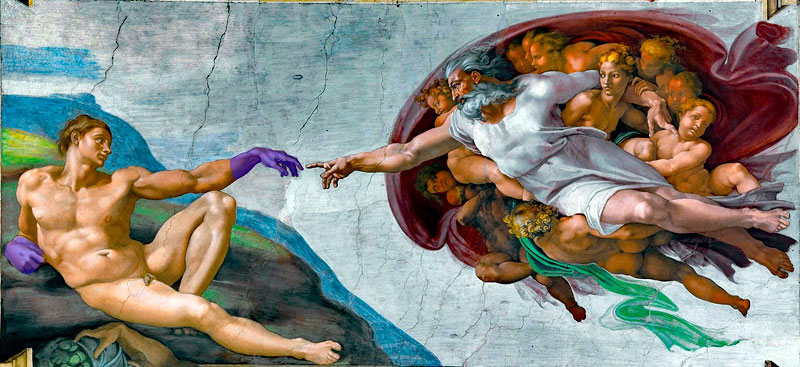
Some people are easily amused.
 |
On March 6, if the PC was an IBM PC-AT or a PS/2, the virus overwrote the first one hundred sectors of the hard disk with nulls. The Michaelangelo virus assumed a geometry which would obfuscate the presence of existing data for any average user with no editing or removal tools.
Can you say BACKUP and RESTORE boys and girls ?
There were specific actions on hard disk subsystems and floppies.
There were admonitions for a while warning users not to run their computers on March 6. The actual mechanics of it all were much less sophisticated than payloads these days.
The Michaelangelo virus has been relegated to the past as one of those early efforts to disrupt the information age by trashing the data of a user. With the more sophisticated payloads like those triggering bitlocker and so forth we now have a need for active detection and removal such that the software manufacturers themselves often build in subsystems designed specificallly for that purpose.
Good riddance to the Michaelangelo virus; but the dirtbags and hairballs remain out there attempting other exploits for your computing persecution.