
Mary, Queen of Scots beheaded in 1587
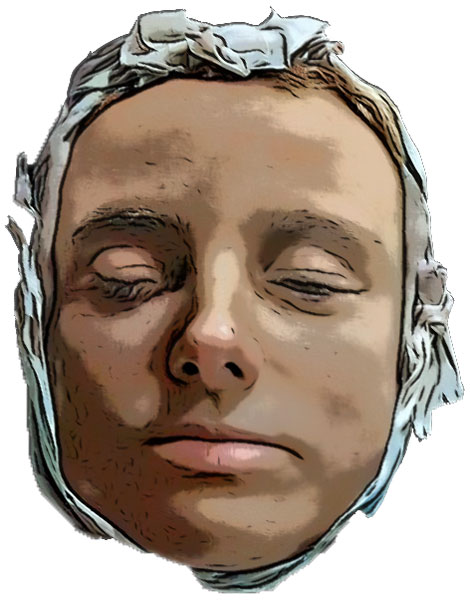 |
The procedure was botched badly.
She was told she was to be executed on the seventh of February at Fotheringhay Castle.
Scaffolding with 2 or 3 steps was erected in the Great Hall and draped in black cloth.
It was furnished with a block, a cushion upon which she would kneel, and three stools for her and the earls of Shrewsbury and Kent, who were there to witness the execution.
The executioner Bull and his assistant knelt before her and asked forgiveness. She foregave them and requested they end all of her troubles.
Her servants, Jane Kennedy and Elizabeth Curle and the executioners helped Mary remove her outer garments, revealing a velvet petticoat and a pair of sleeves in crimson brown.
She was blindfolded by Kennedy with a white veil embroidered in gold, knelt down on the cushion in front of the block on which she positioned her head, and stretched out her arms.
Her final words were, In manus tuas, Domine, commendo spiritum meum ("Into thy hands, O Lord, I commend my spirit").
She was not beheaded with a single strike.
The first blow missed her neck and struck the back of her head.
The second blow severed the neck, except for a small bit of sinew, which the executioner cut through using the axe.
Afterwards, he held her head aloft and declared, "God save the Queen."
At that moment, the auburn wig she was wearing caused her head fell to the ground, revealing that Mary had very short, grey hair.
When news of the execution reached Queen Elizabeth, she became somewhat angry then asserted that Davison had disobeyed her instructions not to part with the warrant and that the Privy Council had acted outside of her authority.
Mary's request to be buried in France was refused by Elizabeth.
Her body was embalmed and left in a secured lead coffin until her burial in a Protestant service at Peterborough Cathedral in late July 1587.